
Global Inflation Index
Global Inflation PressureIndex
Tracking global inflation pressure through multi-sector data integration, enhanced by AI and machinelearning to uncover patterns, relationships, and sentiment, and delivering real-time, structuredinsights that improve clarity and understanding of inflation dynamics.
The State Of Global Inflation Pressure
240Today's Shift
+2.4%The Challenge
Inflation looks simple on the surface — a number that moves up or down. But beneath that number, the system tells a very different story. Since 2018, energy has surged +140%, logistics has climbed +110%, and input costs like fertilizers have risen +136%, all growing at sustained double-digit rates.
Yet most of this pressure remains invisible.
What we call inflation is only the final layer of a much deeper system — one that builds across multiple layers long before it is measured.
Where the Gap Exists:
- Inflation is observed after pressure has already built
- Core drivers like energy (+140%) operate outside traditional focus
- Upstream costs compound before appearing in consumer prices
- A single number cannot reflect a system building across multiple layers of pressure
Our Perspective
We don't treat inflation as a number — we treat it as a system in motion.
- Energy feeds logistics.
- Logistics feeds production.
- Production feeds prices.
As these layers interact, pressure builds continuously — not in isolation, but as a connected network.We track that system in real time.
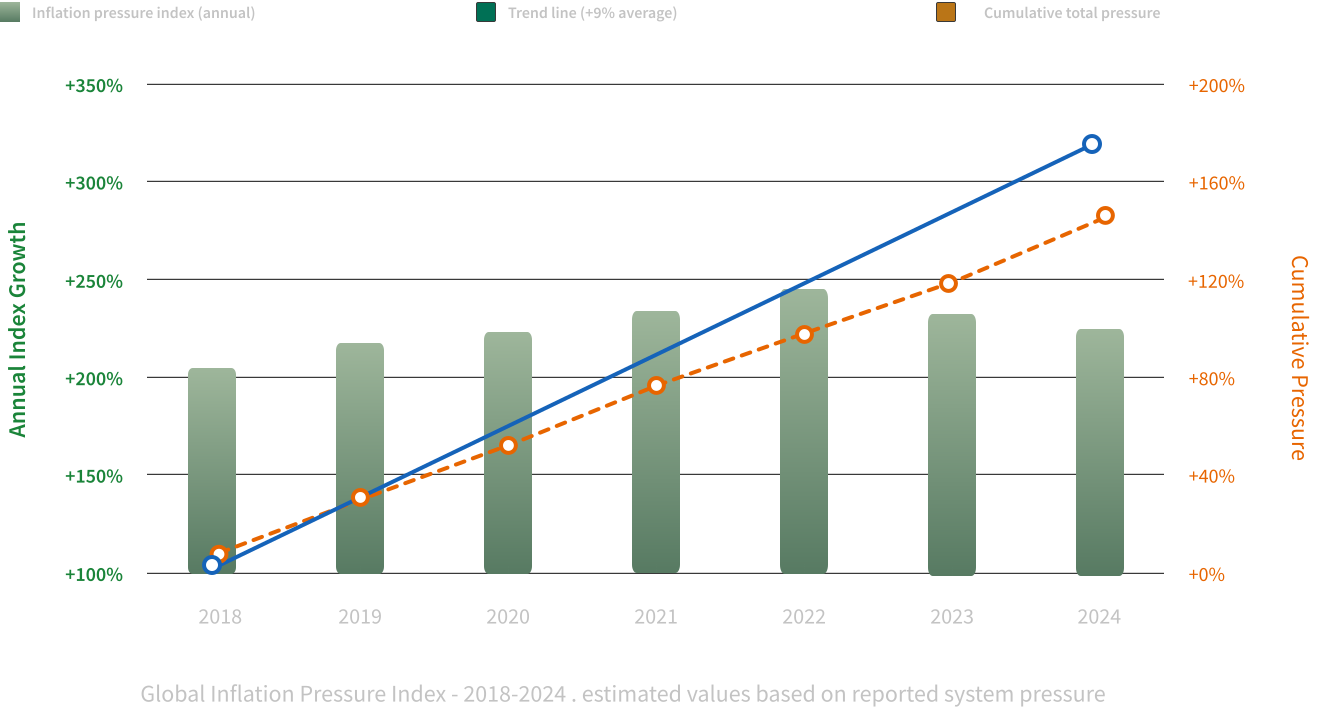
Global inflation pressure has increased over +440% since 2018, growing at approximately +20–23% annually — far exceeding traditional inflation measures. This is not gradual inflation. This is compounded system pressure.
What This Changes:
- Inflation becomes visible before it is felt
- Drivers are understood before they impact markets
- Pressure is tracked as it builds, not after it peaks
- Inflation shifts from a reaction → a measurable system dynamic
Numbers are telling
our story
Structured data powers everything we build. From multi-source datasets to intelligent indices, our platform delivers clear, reliable insights at scale.
Overview
A structured, data-driven index designed to measure inflation pressure by integrating diverse economic indicators across global sectors. Built to provide clarity, consistency, and deeper insight into inflation dynamics.

What Makes It Different
- Not a simple composite or data aggregator
- Multi-sector integration across interconnected economic domains
- Captures cross-sector relationships and dependencies
- Provides a more comprehensive measure of inflation pressure
- Designed for depth, clarity, and interpretability

AI & Data Intelligence
- AI & Machine Learning–driven sentiment extraction
- Pattern recognition across large-scale datasets
- Identification of hidden relationships between variables
- Structured transformation of complex data into interpretable outputs
- Designed to balance analytical depth with usability
How Can We Help You?

Energy
Tracks oil, gas, and electricity price movements across global markets. Reflects upstream cost pressures influencing production and transportation.

Commodities
Covers metals, agricultural goods, and essential raw materials. Captures supply-driven price shifts impacting multiple economic sectors.

Logistics
Measures freight rates, shipping costs, and supply chain disruptions. Highlights cost fluctuations in global trade and distribution networks.

Monetary
Analyzes interest rates, money supply, and liquidity conditions. Reflects policy-driven influences on inflation and economic activity.

Consumer Layer
Captures the transmission of upstream costs into end-user pricing. Represents the final impact of inflation across goods and services.
The Anatomy of Inflation Pressure
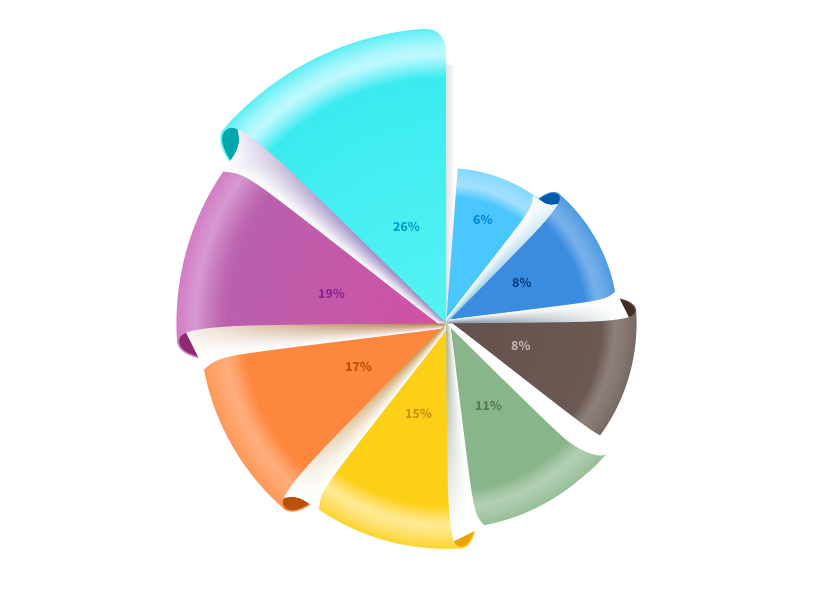
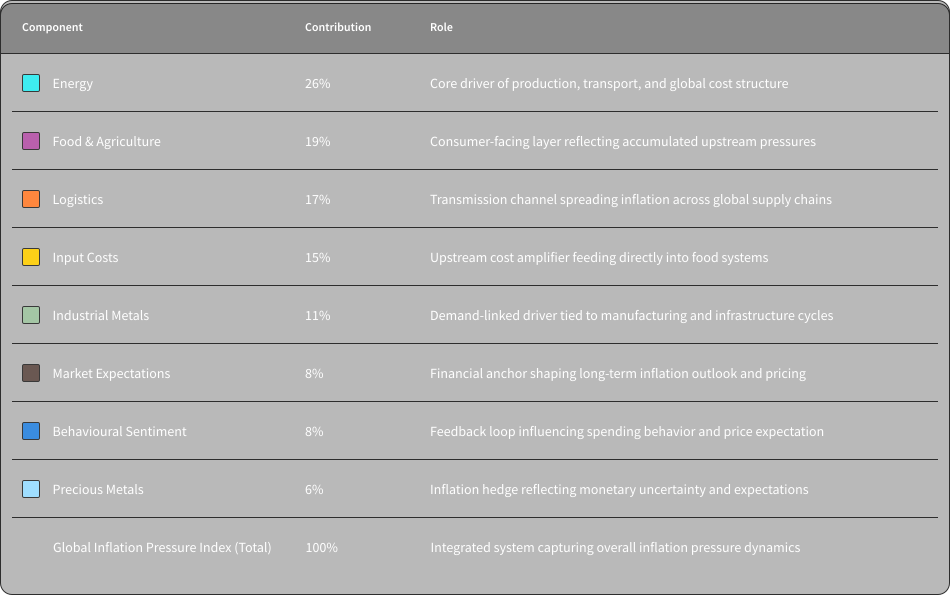
Inflation is not created equally across the economy — it is driven by a concentrated set of forces that contribute unevenly to total pressure.
While traditional metrics compress inflation into a single number, your Global Inflation Pressure Index decomposes it into its underlying structure, showing how each component contributes to the overall system.
Since 2018, total inflation pressure has expanded by over +440%, but this growth has not been uniform. A small group of drivers — particularly energy, logistics, and input costs — account for a disproportionate share of this increase, while other components act as transmission layers or stabilizing forces.
Understanding inflation, therefore, requires understanding its allocation — not just its magnitude
Key Features
Global Pressure Index
Data indices organize large volumes of datasets into a single structured reference. Instead of navigating fragmented sources, users can explore consolidated data through clear index frameworks.
Explore Index Market
Real-Time Insights
Continuously updated signals reflecting current inflation pressure. Enables timely visibility into evolving economic conditions.
AI-Powered Analysis
Leverages AI/ML to detect patterns and hidden relationships in data. Transforms complex datasets into structured, interpretable insights.

Multi-Sector Coverage
Integrates data across key economic sectors for a unified view. Captures interconnected drivers of inflation across the global economy.

Transparent Framework
Built on a clear and structured methodology for data processing. Ensures consistency, traceability, and interpretability of outputs.
Use Cases

Economic Research
Structured datasets for macro analysis

Trend Monitoring
Tracking inflation pressure over time

Market Understanding
Decoding sector-driven inflation dynamics
Data Insights
- Identify dominant inflation drivers
- Track sector-level pressure shifts
- Monitor emerging inflation patterns
- Analyze interconnected economic movements
Future Scope
- Region-specific inflation indices
- Enhanced sector-level granularity
- Predictive modeling capabilities
- Institutional-grade data access (API)
Ready to access structured intelligence?
A forward-looking, transparent, and intelligent framework for understanding global inflation trends through structured data.


